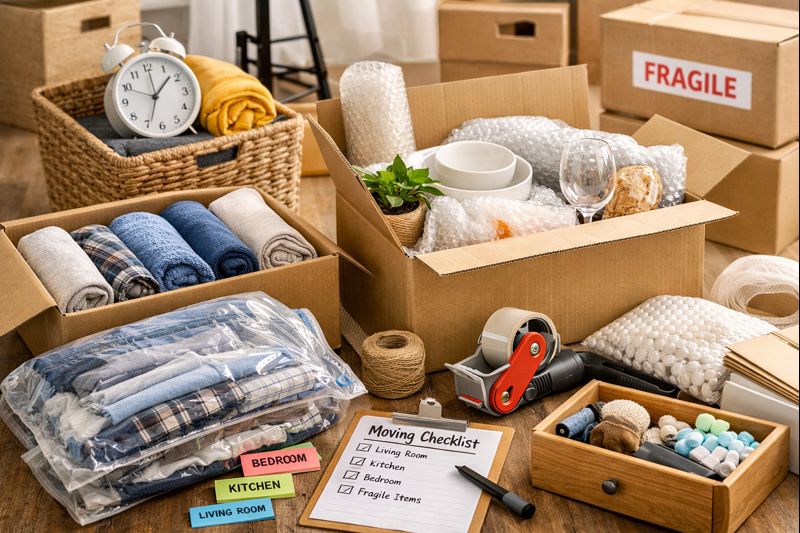
Packing is one of the most demanding phases of any relocation. While moving day often gets the most attention, the real success of a move depends heavily on how efficiently everything is packed beforehand. Poor packing leads to wasted space, damaged items, unnecessary stress, and longer moving times. Smart packing hacks are not just helpful tricks—they are essential strategies that save time, protect belongings, and simplify the entire moving experience.
At My Fast Movers, we understand that packing can feel overwhelming, especially for families, professionals, or businesses managing tight schedules. Smart packing is about working strategically rather than harder. By organizing belongings properly, choosing the right materials, and using space wisely, packing becomes manageable and far less stressful.
Understanding the Importance of Smart Packing
Smart packing is more than placing items into boxes. It is a systematic approach that ensures every item is protected, every box is optimized, and every step of the move is efficient. Without a structured packing strategy, movers often face broken items, misplaced essentials, and excessive box usage.
Efficient packing reduces the total number of boxes required, which directly impacts moving costs and transport space. It also speeds up loading and unloading, saving both time and energy. When packing is done correctly, unpacking becomes faster and more organized, allowing families and businesses to settle in quickly.
Another benefit of smart packing is peace of mind. Knowing that items are packed securely and logically reduces anxiety and prevents last-minute chaos. This confidence is especially important during long-distance or large-scale moves.
By approaching packing as a planned process instead of a rushed task, movers gain better control over the relocation experience.
Creating a Packing Strategy Before You Begin
Every successful move starts with a clear packing strategy. Jumping straight into packing without preparation often leads to disorganization and wasted effort. Planning allows movers to break the process into manageable stages.
Begin by evaluating your belongings room by room. Identify items you use daily, occasionally, or rarely. Items that are rarely used should be packed first, while daily essentials should remain accessible until the final days. This simple prioritization prevents frustration and repeated unpacking.
Setting a realistic packing timeline is equally important. Spreading packing tasks over several days or weeks avoids exhaustion and ensures careful handling of belongings. Assigning specific packing goals for each day keeps progress steady and stress levels low.
Another key element of planning is decluttering. Packing items you no longer need wastes time, space, and money. Sorting items into keep, donate, sell, or discard categories helps streamline the process and reduces the overall load.
A well-defined packing strategy transforms a complex task into an organized workflow.
Choosing Packing Materials That Save Space
Packing materials play a crucial role in space optimization. Using the wrong box sizes or excessive padding often leads to inefficient packing. Smart material selection ensures that items are secure without unnecessary bulk.
Boxes should be chosen based on weight rather than size alone. Heavy items like books should go into small boxes to prevent overloading, while lightweight items such as pillows and blankets can fill larger boxes efficiently. This balance prevents damage and makes boxes easier to handle.
Protective materials should be used thoughtfully. Bubble wrap, packing paper, and foam inserts are excellent for fragile items, but overusing them increases volume. Soft household items like towels, clothing, and bedding can act as natural cushioning while saving space.
Reusable packing materials such as plastic bins and vacuum-sealed bags are excellent for maximizing space. Vacuum bags, in particular, significantly reduce the volume of clothing and linens.
Smart material choices lead to fewer boxes, safer transport, and faster packing.
Efficient Clothing Packing Techniques
Clothing often takes up a large portion of packing space. Without proper techniques, clothes can fill countless boxes and bags. Smart clothing packing reduces volume while keeping garments organized.
Rolling clothes instead of folding them saves space and minimizes wrinkles. This method works especially well for casual wear, activewear, and sleepwear. For delicate or formal clothing, wardrobe boxes allow garments to remain on hangers, preventing creases and saving time during unpacking.
Seasonal clothing can be packed separately and labeled clearly. This prevents unnecessary unpacking and keeps essential items accessible. Shoes should be packed carefully, with smaller items placed inside them to utilize empty space.
Using vacuum-sealed bags for bulky clothing such as jackets and sweaters significantly reduces space usage. These bags are ideal for long-distance moves where space efficiency is critical.
Proper clothing packing saves both time and valuable box space.
Maximizing Space Inside Boxes
One of the most effective packing hacks is using every inch of available space. Empty gaps inside boxes lead to wasted volume and increased box counts.
Filling gaps with soft items such as socks, scarves, or towels ensures that boxes are packed tightly without damaging contents. This technique stabilizes items and prevents shifting during transport.
Items of similar weight and size should be grouped together. Mixing heavy and light items often results in uneven boxes that are difficult to handle. Balanced boxes are safer and easier to stack.
Packing items vertically, especially flat objects like books and kitchenware, often saves more space than horizontal stacking. Vertical packing also reduces pressure on fragile items.
Optimizing box interiors ensures efficient transport and minimizes damage risks.
Using Furniture as Packing Space
Furniture often contains unused internal space that can be utilized during packing. Drawers, cabinets, and storage benches can hold lightweight items, reducing the need for additional boxes.
When packing inside furniture, items should be secured properly to prevent movement. Wrapping furniture with stretch wrap keeps drawers closed and contents stable during transit.
Beds, tables, and shelving units that can be disassembled should be broken down when necessary. This not only saves space but also prevents damage during loading.
Using furniture strategically reduces packing time and maximizes available moving space.
Packing Fragile Items Safely and Efficiently
Fragile items require special attention during packing. Improper handling leads to breakage and unnecessary stress. Smart packing ensures fragile items are protected without excessive bulk.
Each fragile item should be wrapped individually, with heavier items placed at the bottom of boxes. Plates should be packed vertically rather than stacked flat to reduce pressure.
Glassware and electronics benefit from original packaging when available. If original boxes are not available, custom padding using household materials can be equally effective.
Clearly labeling fragile boxes ensures careful handling during loading and unloading.
Efficient fragile packing balances protection with space optimization.
Organizing Boxes for Faster Unpacking
Packing efficiency does not end when boxes are sealed. Organization plays a vital role in saving time during unpacking. Clearly labeled boxes reduce confusion and speed up the settling-in process.
Each box should include its destination room and a brief description of contents. Color-coding labels for different rooms makes it easier for movers to place boxes correctly.
Creating an inventory list provides an overview of packed items and ensures nothing goes missing. This is especially helpful for large moves.
Well-organized boxes make unpacking smoother and less overwhelming.
Preparing an Essentials Packing System
An essentials packing system ensures that important items are accessible immediately after the move. Without it, movers often struggle to find basic necessities.
Essentials boxes should include toiletries, chargers, medications, important documents, and basic clothing. Each family member can have a personal essentials box for convenience.
Labeling these boxes clearly prevents them from being loaded deep inside the moving truck.
An essentials system saves time and reduces post-move stress.
Reducing Packing Stress with Professional Help
Even with smart packing techniques, some moves require professional support. Large households, tight timelines, or fragile collections can benefit from expert packing services.
Professional movers understand how to optimize space while ensuring safety. Their experience allows them to pack efficiently and handle items with care.
At My Fast Movers, professional packing services combine smart strategies with proven techniques, ensuring a smooth and stress-free move.
Choosing professional support transforms packing from a burden into a seamless process.
Final Thoughts on Smart Packing
Smart packing hacks save time, space, and energy while protecting valuable belongings. By planning ahead, using materials wisely, maximizing space, and staying organized, packing becomes an efficient and controlled process.
Whether handling packing independently or with professional assistance, applying smart techniques ensures a smoother transition to your new space. With the right approach, packing no longer feels overwhelming—it becomes a strategic step toward a successful move.
Smart packing hacks to save time and space are essential for anyone seeking a stress-free, organized, and efficient relocation experience.