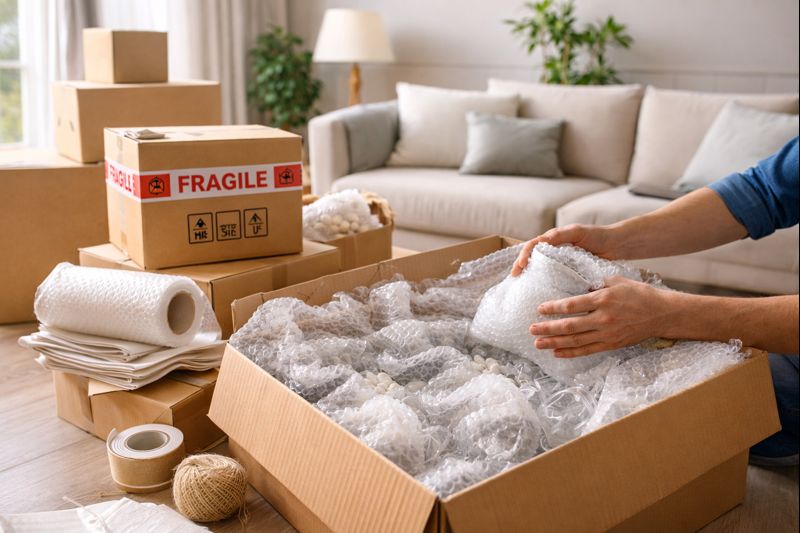
Packing fragile items is one of the most critical and stressful parts of any move. Whether you are relocating across the street or to a new city, fragile belongings such as glassware, electronics, artwork, and decorative items require careful handling and proper packing techniques. A single mistake during packing can result in broken valuables, emotional stress, and unnecessary replacement costs.
Learning how to pack fragile items safely the first time allows you to move with confidence. Instead of worrying about damaged belongings, you can focus on settling into your new home smoothly. With the right preparation, materials, and strategy, fragile items can be protected effectively throughout the moving process.
At My Fast Movers, we understand how important your delicate items are. Our experience in professional moving and packing has shown that proper planning and expert techniques significantly reduce the risk of damage during relocation.
Understanding Fragile Items and Why They Need Special Care
Fragile items are any belongings that can break, crack, scratch, or malfunction when exposed to pressure, impact, or movement. These items are often sensitive not only because of their material but also because of their design and structure.
Common fragile items include glassware, dishes, mirrors, picture frames, televisions, laptops, lamps, antiques, collectibles, musical instruments, and decorative accessories. Some fragile items may not look breakable at first glance, yet they can be easily damaged if packed incorrectly.
What makes fragile items especially risky during a move is the constant motion involved in lifting, loading, transportation, and unloading. Boxes can shift, stacks can collapse, and vibrations from the road can cause internal movement that leads to breakage.
- Glass and ceramic household items
- Electronics and display screens
- Artwork, mirrors, and frames
- Antiques and sentimental belongings
Understanding which items are fragile allows you to plan properly and apply the right packing techniques from the beginning, reducing last-minute mistakes and damage.
Planning Ahead for Packing Fragile Items
Successful fragile item packing begins long before moving day. Planning ahead helps you avoid rushing, which is one of the biggest causes of broken items during a move.
Start by creating a detailed inventory of all fragile belongings in your home. This allows you to estimate how many boxes, how much packing material, and how much time you will need. Packing fragile items always takes longer than packing non-breakable items, so allocating extra time is essential.
It is also important to decide which items you will pack yourself and which ones you may want professionals to handle. High-value, rare, or extremely delicate items often benefit from expert packing services.
My Fast Movers recommends starting fragile item packing at least one to two weeks before moving day. This reduces pressure and allows you to focus on packing carefully rather than quickly.
- Create a fragile items checklist
- Set aside packing days for delicate items
- Declutter unnecessary fragile belongings
- Arrange professional packing if needed
Planning ahead ensures that fragile items receive the time and attention they require, minimizing stress and costly mistakes.
Selecting the Right Packing Materials for Fragile Items
The quality of packing materials plays a major role in protecting fragile items. Using weak boxes or insufficient padding increases the risk of damage regardless of how carefully items are packed.
Sturdy, high-quality cardboard boxes are essential. Double-wall boxes are ideal for heavier or extremely fragile items. Avoid using old or damaged boxes, as they may collapse under weight or pressure.
Cushioning materials such as bubble wrap, foam sheets, packing paper, and packing peanuts help absorb shock and prevent movement inside boxes. Packing paper is preferred over newspaper because it does not leave ink stains on delicate surfaces.
- Double-wall cardboard boxes
- Bubble wrap and foam padding
- Clean packing paper
- Strong packing tape
- Fragile labels and markers
At My Fast Movers, professional-grade packing materials are used to ensure maximum protection for delicate belongings throughout the move.
Step-by-Step Process to Pack Fragile Items Safely
Packing fragile items requires a structured step-by-step approach. Skipping steps or rushing through the process often results in damage.
Begin by reinforcing the bottom of each box with extra tape. Add a thick layer of cushioning material to create a protective base. This helps absorb impact when boxes are placed on the ground.
Each fragile item should be wrapped individually. Use bubble wrap or packing paper and ensure that all exposed surfaces are covered. Secure wrapping with tape to prevent it from loosening.
Place heavier fragile items at the bottom of the box and lighter items on top. Always leave space between items and fill gaps with cushioning material to prevent movement.
- Reinforce box bottoms
- Wrap items individually
- Place heavier items at the bottom
- Fill empty spaces completely
Once the box is packed, seal it securely and label it clearly as “Fragile.” Indicate which side should remain upright to guide movers during handling.
Packing Glassware and Dishes the Right Way
Glassware and dishes are among the most commonly damaged items during a move. Plates, bowls, cups, and glasses require careful wrapping and proper placement inside boxes.
Each piece should be wrapped individually using packing paper or bubble wrap. Plates should be packed vertically rather than stacked flat, as this reduces pressure and the risk of cracking.
Glasses and cups should be filled with packing paper before wrapping to provide internal support. Use dividers when possible to keep items separated.
- Wrap each dish individually
- Pack plates vertically
- Use dividers for glassware
- Avoid overpacking boxes
Careful packing of kitchen items ensures they arrive intact and ready for use in your new home.
How to Pack Electronics and Screens Safely
Electronics such as televisions, computers, monitors, and gaming systems are fragile not only because of their screens but also due to internal components.
Whenever possible, pack electronics in their original boxes. These boxes are designed to provide proper support and protection. If original packaging is unavailable, use sturdy boxes and generous padding.
Wrap screens with foam sheets or bubble wrap and protect them with rigid cardboard panels. Avoid placing heavy items on top of electronic boxes.
Label electronic boxes clearly and keep cables, remotes, and accessories organized in labeled bags.
Packing Artwork, Mirrors, and Decorative Items
Artwork, mirrors, and decorative pieces often hold emotional or monetary value, making their safe transport especially important.
Cover glass surfaces with masking tape in an “X” pattern to reduce shattering risk. Wrap items in bubble wrap and protect them with cardboard sheets or specialty mirror boxes.
Never lay mirrors flat inside boxes. Always transport them vertically and ensure they are well-cushioned.
Labeling and Organizing Fragile Boxes
Proper labeling plays a crucial role in protecting fragile items. Clear labels help movers identify boxes that require extra care.
Use bold markers to label boxes as “Fragile” and “This Side Up.” Color-coding fragile boxes can also make them easier to identify during unloading.
Keeping a separate list of fragile boxes allows you to track them and ensure they are unloaded first at your new home.
Why Professional Movers Are Worth It for Fragile Items
Packing fragile items on your own can be time-consuming and stressful. Professional movers bring experience, training, and proper equipment that significantly reduce the risk of damage.
My Fast Movers provides expert packing and moving services designed to protect fragile belongings from start to finish. Our team understands how to handle delicate items safely and efficiently.
Professional packing also saves you time and provides peace of mind, knowing your valuables are in capable hands.
Learning how to pack fragile items safely the first time is essential for a successful move. With careful planning, quality materials, and professional support from My Fast Movers, you can ensure your fragile belongings arrive safely and stress-free.